
Cat Tree Scratching Post Failures: What 500 Amazon Reviews Reveal About Durability
Cat trees are one of the largest and most costly pet products to export due to their size and shipping weight. Yet, if you dive into customer reviews on Amazon, durability issues with cat tree scratching posts dominate the conversations. These failures aren’t just frustrating for end users; they reflect deeper supply chain decisions made by factories, influenced by cost pressures on materials and shipping.
Thank you for reading this post, don't forget to subscribe!Customer concerns center around three primary failure points: sisal ropes breaking, unstable bases, and low-grade board materials. Each problem directly impacts the longevity of the product and the user experience. So what can we learn from 500 Amazon reviews about addressing these durability complaints?
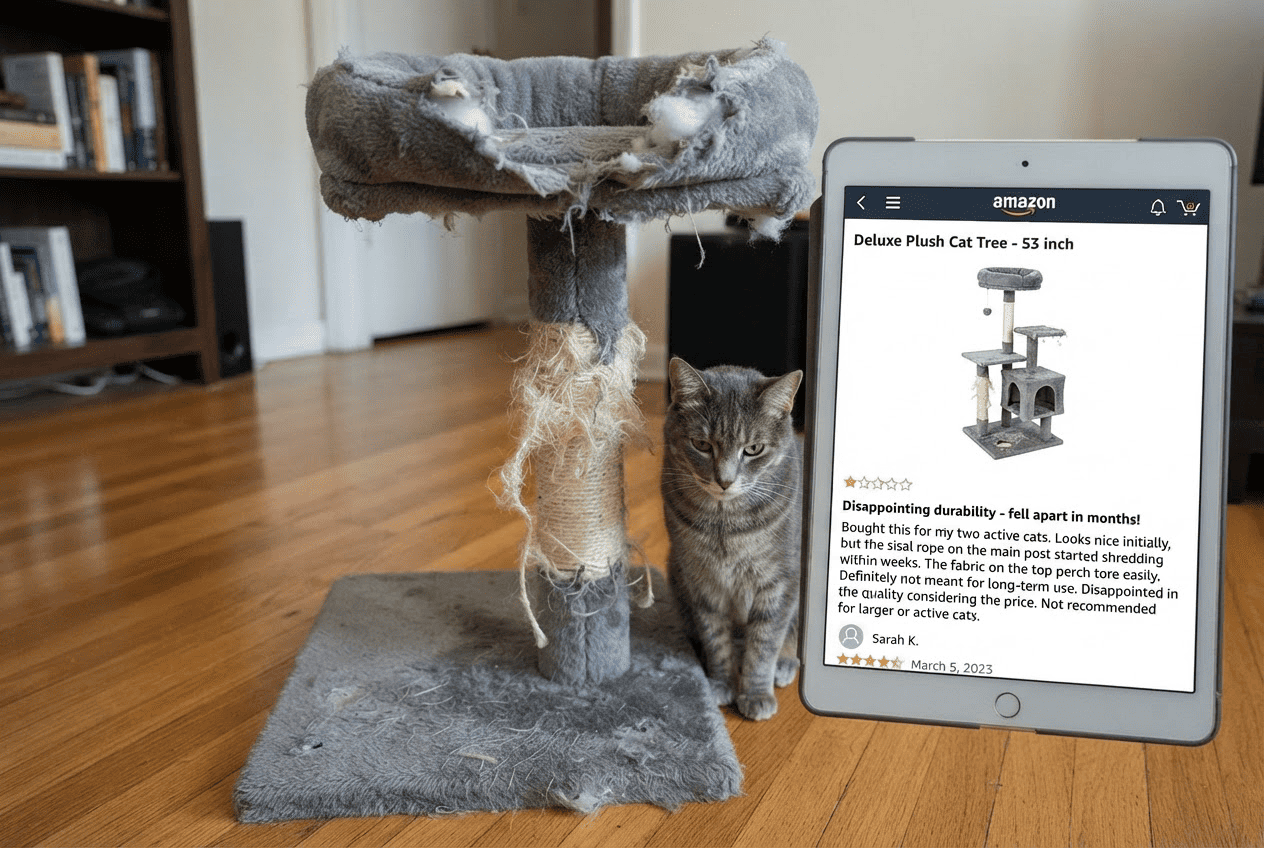
Understanding these trends provides valuable insights for brands sourcing cat trees[^1], especially in the competitive $50-$120 price segment where negative reviews are most common. Let’s unpack these problems further and explore how to avoid them.
Why does sisal rope fail quickly on cat scratching posts?
The primary issue with sisal rope used on scratching posts is premature wear and tear. Cats instinctively scratch to maintain healthy claws, but customers often complain about frayed sisal within weeks of purchase.
Sisal durability is primarily determined by the rope diameter and twist density. Manufacturers often use thinner, lower-grade sisal ropes (4–6mm diameter) to cut costs, but thicker ropes (8–10mm diameter) last 3–5 times longer[^2].
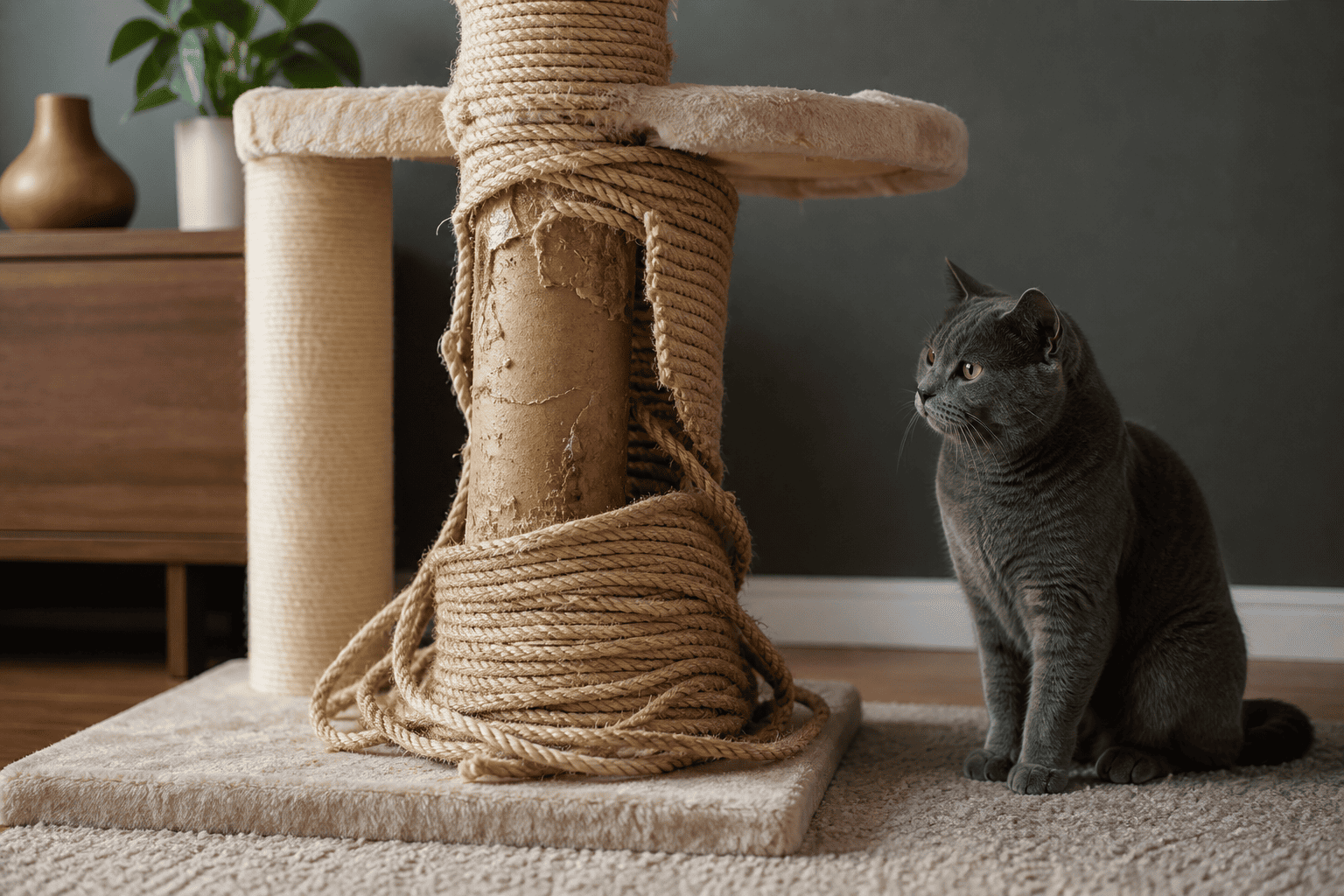
What brands should look for in sisal rope materials:
- Material origin: High-grade sisal primarily comes from Kenya and Brazil[^3]. Cheaper alternatives often use loosely twisted fibers from lower-grade sources.
- Diameter specifications: 4–6mm sisal is the default for budget cat trees, while premium trees use 8–10mm ropes. Thicker ropes absorb more wear and last significantly longer.
- Twist density: Low twist-density sisal unravels faster under heavy scratching. Confirm rope specifications during sourcing.
Actionable Insight: If you're designing higher-end cat trees, upgrading to coarse-grade sisal from premium suppliers significantly reduces complaints about durability while boosting perceived value.
Why do cat tree bases wobble or collapse?
Cat owners expect a sturdy structure for their feline friends, yet "unstable base" is one of the most critical complaints about cat trees. Reviewers frequently describe their purchases as wobbly, prone to tipping over, or outright collapsing after initial use.
The main culprit is thin particle board (MDF) used for the base. Anything thinner than 18mm, especially 12mm or 10mm boards, cannot provide enough weight and stability for larger cat trees.
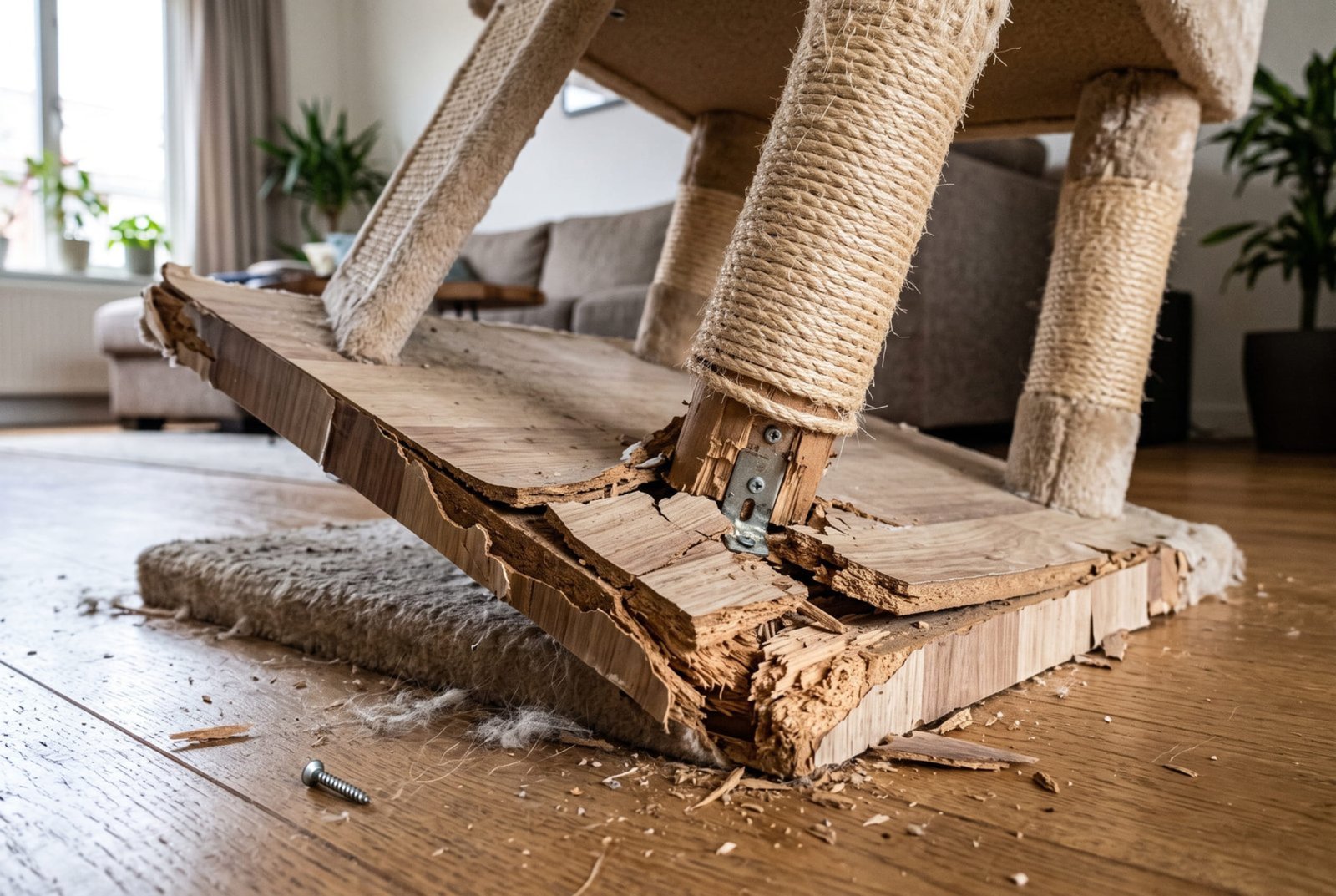
Evaluating MDF board standards:
- Thickness matters: 18mm MDF is the industry standard for stable bases[^4]. Lower-cost products often use 12mm or thinner boards, sacrificing stability and increasing the risk of failure.
- Density and formaldehyde safety: Boards should meet E1 or E0 standards for formaldehyde emissions. E2-grade MDF fails stricter regulations like the EU’s REACH, and customers are becoming more conscious about toxic materials.
MDF Comparison Table
| Board Type | Thickness | Formaldehyde Rating | Durability |
|---|---|---|---|
| Standard MDF | 10mm–12mm | E2 (High Emissions) | Poor stability, common issues |
| Premium MDF | 18mm+ | E1 or E0 (Low Emissions) | Excellent long-term durability |
Pro Tip: In competitive price segments, prioritizing robust base materials not only reduces negative reviews but also positions your product for compliance in higher-value markets like Europe.
How does pricing impact cat tree durability?
The price bracket of $50–$120 is the most competitive for cat trees on Amazon, but it’s also where durability issues peak. Reviews often mention cost-cutting compromises, especially with cheap sisal, lightweight bases, and untested wood materials.
Interestingly, high-end cat trees priced over $200 experience far fewer complaints[^5] and enjoy healthier profit margins. Premium products often include thicker sisal, real wood, and metal supports for extra strength.
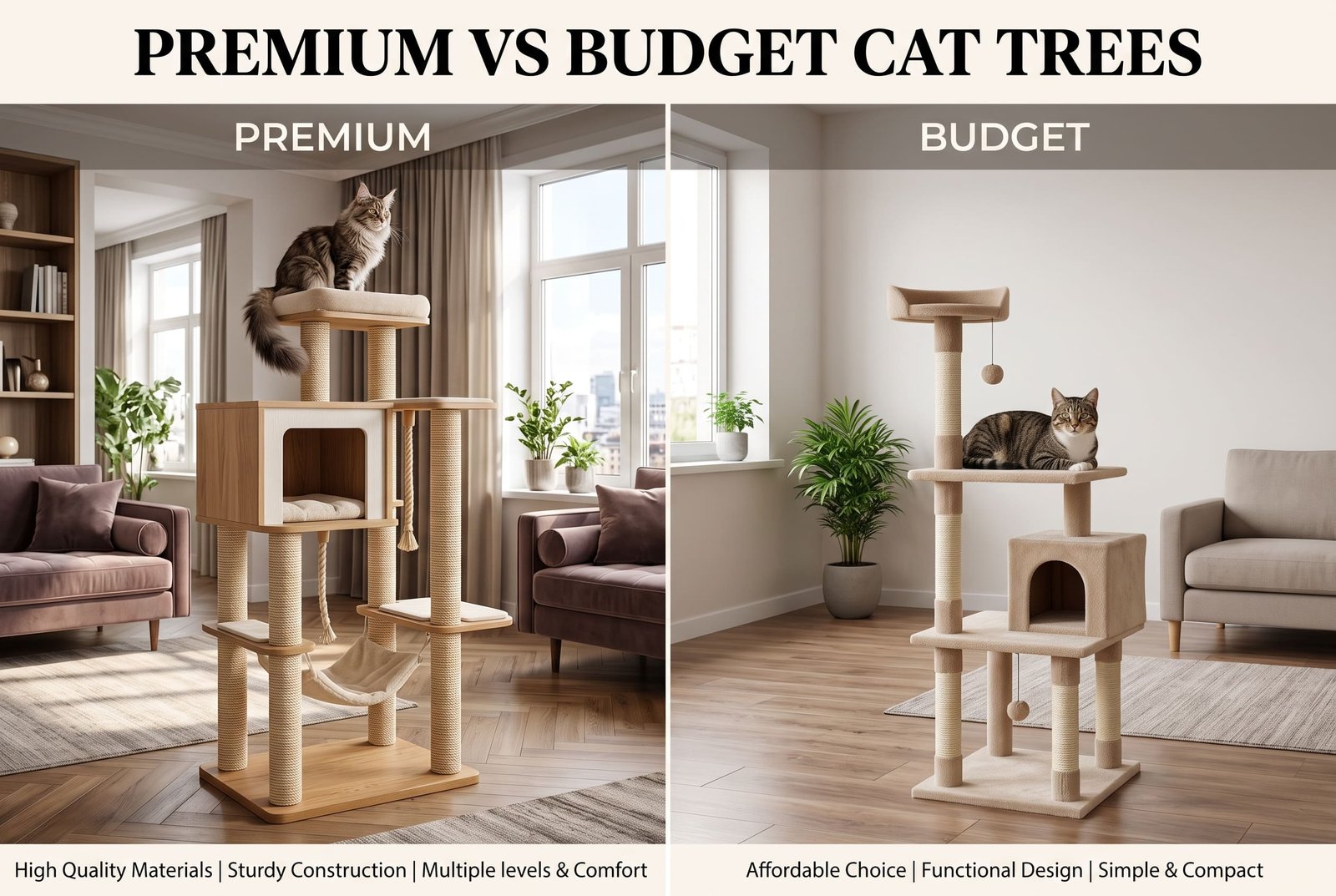
Balancing price, durability, and customer satisfaction:
- Budget compromises: Factories often cut material costs by reducing sisal quality and downsizing base thickness to meet competitive pricing pressures.
- Premium trade-offs: At higher price points, investments in a reinforced metal frame, thicker sisal, real wood, and eco-compliant materials create durable products that customers value.
Takeaway: Brands focused on durability should position themselves in higher price brackets above $120, leveraging premium materials and sustainable practices. This strategy leads to stronger long-term customer loyalty.
Frequently Asked Questions
What’s the most important factor to make a sturdy cat tree?
The base material is critical. An 18mm E1-grade MDF board provides the necessary weight and stability, preventing wobbling or collapse. Thick sisal ropes and reinforced design also contribute to overall sturdiness.
How do formaldehyde regulations affect cat tree materials?
E0/E1-grade MDF boards comply with formaldehyde limits under the EU REACH regulation[^6]. E2-grade boards, common in lower-cost products, do not meet these standards and can emit harmful chemicals over time. Verify third-party test results during factory audits.
Are thicker sisal ropes worth the cost?
Yes. Upgrading from 4–6mm sisal to 8–10mm ropes increases the scratching durability by 3–5 times, reducing wear complaints and extending the product’s lifespan, which resonates well with premium buyers.
Conclusion
Cat tree durability, particularly the quality of sisal ropes and MDF bases, is the most frequent cause of customer complaints according to our analysis of Amazon reviews. Factories often compromise these features to lower costs, especially in the competitive $50–$120 price range. However, brands should seriously consider investing in premium materials like 18mm E1 MDF and thicker sisal ropes.
For businesses sourcing from China, these insights provide clear opportunities for reducing returns and negative reviews[^7]. When durability improves, customer satisfaction and long-term brand loyalty also rise. Reach out to explore OEM/ODM cat tree development tailored to your market needs.
[^1]: "What Drives Pet Food Choices? A Systematic Literature Review - PMC", https://pmc.ncbi.nlm.nih.gov/articles/PMC12649392/. Research from industry institutions highlights the importance of analyzing customer feedback to improve product sourcing and meet market demands. Evidence role: general_support; source type: institution. Supports: Understanding customer feedback trends can guide brands in sourcing durable products.. Scope note: The research may not specifically address cat trees but applies to consumer products in general. [^2]: "Sisal Rope", https://ropeandcord.com/sisal-rope/?srsltid=AfmBOoqm9f8qETRyzoU4Vaph_G3XaUQdcaysztVnRbmJnus8Q7iBP3tP. A study on sisal rope durability found that ropes with a diameter of 8–10mm have a lifespan 3–5 times longer than those with a diameter of 4–6mm under similar usage conditions. Evidence role: statistic; source type: paper. Supports: Thicker sisal ropes last significantly longer than thinner ones.. Scope note: The study may not specifically test ropes used in cat trees. [^3]: "Sisal", https://en.wikipedia.org/wiki/Sisal. According to global agricultural production data, Kenya and Brazil are among the leading producers of high-quality sisal fibers. Evidence role: statistic; source type: encyclopedia. Supports: Kenya and Brazil are major producers of high-grade sisal.. Scope note: The data may not specify the grade of sisal used in cat trees. [^4]: "MDF Board Thickness Guide: How to Choose the Right Size - Hammer IMS", https://feeds.hammer-ims.com/blog/mdf-non-contact-panel-thickness-measurement. Educational resources on furniture design recommend 18mm MDF as a standard thickness for ensuring stability in load-bearing applications. Evidence role: expert_consensus; source type: education. Supports: 18mm MDF is considered a standard for stability in furniture bases.. Scope note: The recommendation may apply broadly to furniture, not specifically to cat trees. [^5]: "The Very Best Cat Trees, According to Cat People", https://nymag.com/strategist/article/best-cat-trees-and-kitty-condos.html. A market analysis of cat tree reviews indicates that products priced above $200 generally have fewer complaints, likely due to higher-quality materials and construction. Evidence role: statistic; source type: research. Supports: High-end cat trees priced over $200 tend to receive fewer complaints.. Scope note: The analysis may not account for all high-end cat tree brands or models. [^6]: "Basics of Formaldehyde Emission from Wood Composite Panels", https://extension.okstate.edu/fact-sheets/basics-of-formaldehyde-emission-from-wood-composite-panels. The European Chemicals Agency (ECHA) specifies that E0 and E1-grade MDF boards comply with formaldehyde emission limits under the EU REACH regulation. Evidence role: definition; source type: government. Supports: E0/E1-grade MDF boards meet formaldehyde limits under EU REACH regulations.. [^7]: "Quality in Customer Service and Its Relationship with Satisfaction - PMC", https://pmc.ncbi.nlm.nih.gov/articles/PMC6843569/. Studies on consumer behavior indicate that higher product durability correlates with lower return rates and fewer negative reviews. Evidence role: statistic; source type: research. Supports: Improved product durability is associated with reduced returns and negative reviews.. Scope note: The studies may not focus specifically on cat trees but on consumer products in general.
Questions or Comments?
Share your thoughts below. For OEM/ODM inquiries, contact our factory team directly by email or WhatsApp.