A practical OEM guide to pet bed structure, fabric, filling, dimensions, removable covers, and production-ready specifications.
Thank you for reading this post, don't forget to subscribe!Updated: August 28, 2026
By: ZRC Pet Product Development Team
For: Pet brands, importers, wholesalers, retail buyers, and e-commerce sellers

Custom pet bed manufacturing starts with a product specification, not a logo file. Before ZRC cuts fabric for a new sample, the buyer and factory should agree on the pet bed structure, outer fabric, filling, cover construction, finished dimensions, branding, and packaging assumptions.
Quick answer: A buyer should confirm five decisions before requesting a custom pet bed sample: the bed structure, the outer fabric, the filling system, the cover and zipper construction, and the finished dimensions with tolerances. Branding and packaging should then be added to the same written specification. This gives the sample room measurable requirements and gives the buyer an objective approval reference.
Pet bed specification summary
| Decision | What the buyer should define | What ZRC should confirm before sampling |
|---|---|---|
| Structure | Donut, bolster, foam, cave, mat, or elevated cot | Shape, panel construction, support points, removable parts |
| Outer fabric | Hand feel, cleaning method, color, print, intended use | Available fabric, weight or construction, color reference, print feasibility |
| Filling | Polyester fiber, foam, egg-crate foam, or combination | Fill type, thickness or fill weight, recovery, inner bag or liner |
| Cover and zipper | Fixed or removable cover, washing expectation | Zipper position, opening length, seam reinforcement, refitting method |
| Dimensions | Finished size and target pet range | Measurement points, tolerance, compressed and uncompressed dimensions |
| Branding | Label, embroidery, print, patch, or hangtag | Artwork size, printable area, color reference, attachment method |
| Packaging | Sales channel and pack style | Compression limits, carton size, inserts, barcode and carton-mark requirements |
Table of contents
- Why should a pet bed specification come before the first sample?
- Which pet bed structure should a buyer choose?
- How should buyers select pet bed fabric?
- Which filling works for a custom pet bed?
- What makes a removable cover practical?
- Which dimensions and tolerances should be documented?
- When should branding and packaging be confirmed?
- What information helps ZRC prepare a useful quotation?
- How does ZRC move from brief to approved sample?
- Frequently asked questions
Why should a pet bed specification come before the first sample?
A pet bed specification turns a visual idea into manufacturing instructions. A reference image can show the intended appearance, but it does not define the fabric, filling, finished measurements, seam construction, zipper opening, label position, or acceptable tolerance.
When these decisions are left open, the sample maker must fill the gaps with assumptions. The buyer may then receive a well-made sample that is still unsuitable for the target price, packing method, sales channel, or customer expectation.
ZRC uses the pre-sample review to identify missing decisions and place them in a written specification. The purpose is not to make the inquiry more complicated. The purpose is to make each sample round test a specific product decision.
Which pet bed structure should a buyer choose?
The right pet bed structure depends on the intended use, target animal, retail position, cleaning expectation, and shipping constraint. A single structure is not automatically best for every program.
| Pet bed structure | Common product objective | Manufacturing questions to confirm |
|---|---|---|
| Donut or calming bed | Soft, enclosed resting surface | Rim height, fill distribution, center depth, shape recovery |
| Bolster or sofa bed | Defined walls with an open entry | Wall support, base cushion, cover removal, piping and seam placement |
| Orthopedic or foam bed | Flat support surface with a defined foam layer | Foam type, thickness, cover fit, inner liner, compression limits |
| Cave or hooded bed | Enclosed shape for cats or small dogs | Hood support, opening size, lining, shape stability |
| Flat mat | Simple washable or portable format | Layer construction, quilting, anti-slip base, edge binding |
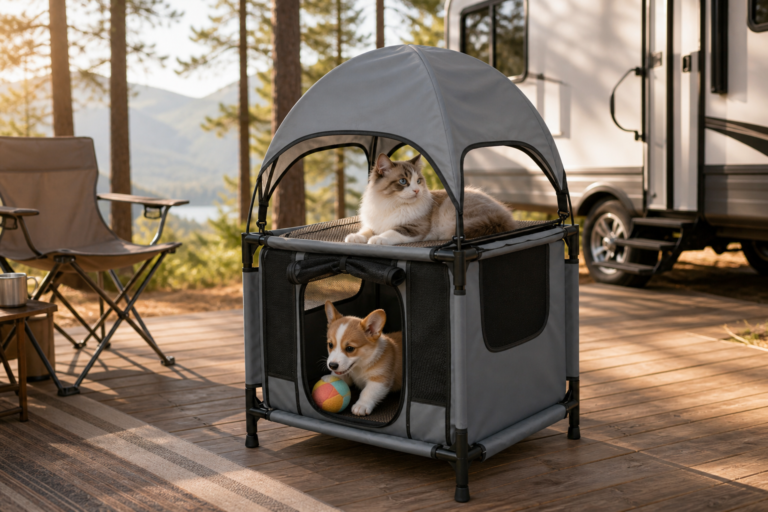
| Elevated cot | Airflow and off-ground support | Frame material, mesh attachment, leg joints, finished dimensions |
ZRC currently manufactures donut beds, bolster beds, orthopedic foam beds, cave beds, and elevated cots as part of its custom pet bed program.[^1] Buyers can start with an existing structure for private-label customization or provide a drawing, sample, reference photo, or product link for an OEM development review.
How should buyers select pet bed fabric?
Pet bed fabric should be chosen by use case and construction requirement, not by appearance alone. The same surface that feels attractive in a photograph may perform differently when sewn around a curved bolster, printed with artwork, compressed for shipment, or repeatedly removed for washing.

Plush and sherpa
Plush and sherpa create a soft hand feel and are often used for donut beds, cave-bed linings, and warm sleeping surfaces. Buyers should confirm pile direction, color consistency, seam appearance, shedding expectations, and whether the material will be used on every panel or only the contact surface.
Oxford fabric
Oxford fabric is commonly considered when the buyer wants a more structured or practical outer surface. The specification should identify the exact selected fabric rather than relying only on the word “Oxford,” because construction, coating, weight, color, and hand feel can vary between fabric options.
Faux linen, velvet, and decorative fabrics
Faux linen and velvet can support a furniture-style retail position. Buyers should review color under consistent light, seam appearance, potential marking during packing, and whether the selected branding method works on the chosen surface.
Mesh
Breathable mesh is commonly used for elevated pet cots. The factory should confirm how the mesh attaches to the frame, which edges carry load, how corners are reinforced, and how the finished cover fits the assembled frame.
If a buyer requires a specific textile certification, the requirement should identify the certificate, product class, component scope, and target market. For example, OEKO-TEX STANDARD 100 is a testing and certification system for textile materials and components, but a supplier should not imply that every material is certified without certificate-level evidence.[^3]
Which filling works for a custom pet bed?
The filling determines more than softness. It affects shape, recovery, packing volume, cover fit, and the way a buyer evaluates the sample after unpacking.
Polyester fiber filling
Polyester fiber is used in many soft donut and bolster structures. The specification should state where the filling is placed, how the fill is divided between the base and walls, and how the sample will be evaluated after it has recovered from packing.
Foam insert
A foam insert creates a defined thickness and a flatter support surface. Buyers should confirm the foam type, thickness, piece construction, inner liner, and how the foam enters and exits the cover.
Egg-crate foam
Egg-crate foam changes the surface geometry while retaining a defined insert shape. The specification should include which side faces upward, the finished insert dimensions, the cover allowance, and the acceptable fit after assembly.
Combination construction
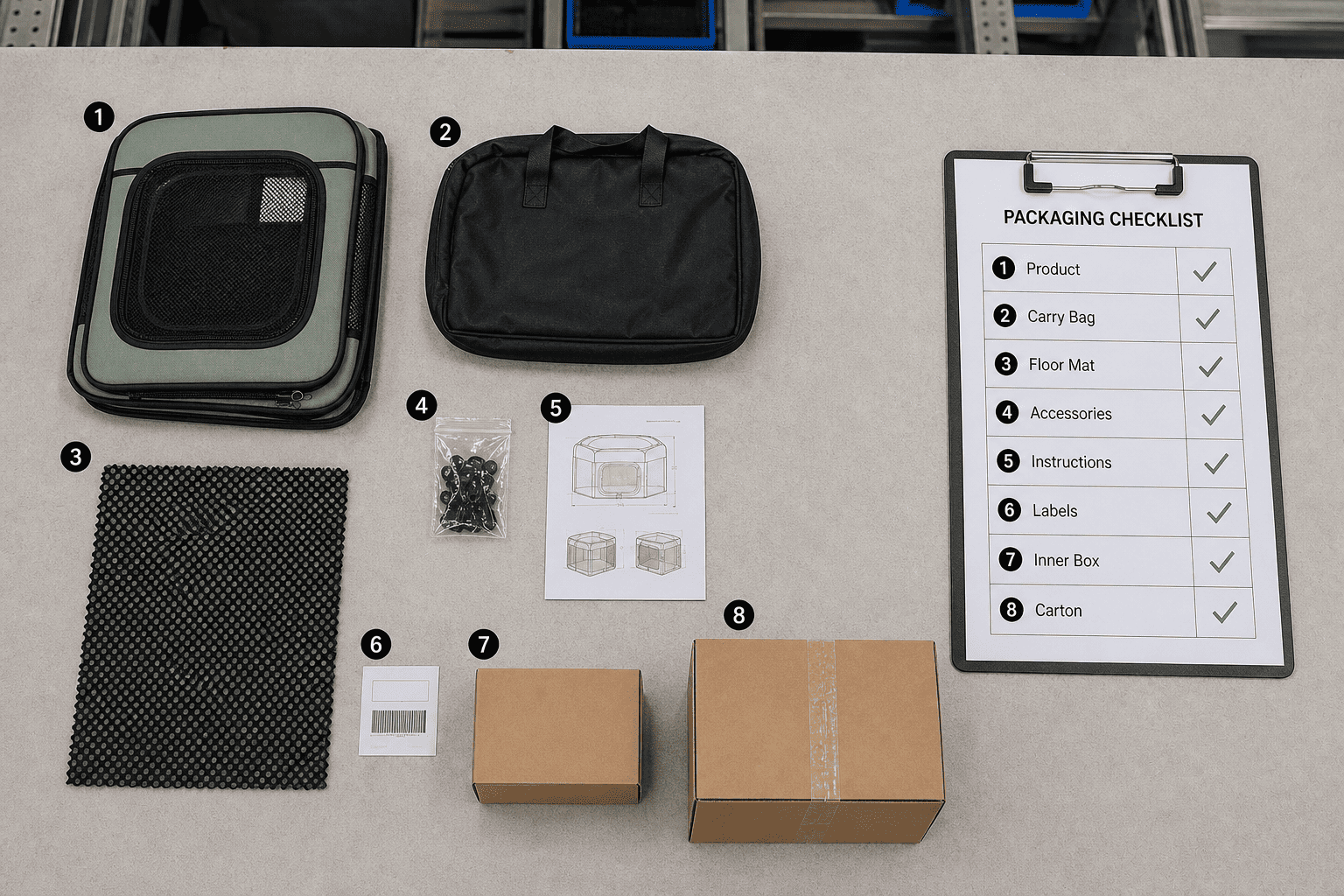
Some pet beds use foam in the base and fiber in the bolsters. This can separate the support function from the surrounding cushion, but it also creates more components to identify, inspect, pack, and assemble. Each component should appear on the bill of materials and packaging checklist.
What makes a removable cover practical?
A removable pet bed cover is practical only when the opening, zipper, seam construction, inner components, and refitting process work together. Adding a zipper without reviewing those relationships can leave the buyer with a cover that is technically removable but difficult to use.
Before sampling, ZRC recommends confirming:
- the zipper location and opening length;
- whether the base cushion and bolsters are removed separately;
- the seam reinforcement at both zipper ends;
- whether the filling has its own inner bag or liner;
- the orientation of the cover during refitting;
- the intended care instruction and label wording;
- whether the zipper pull needs a cover, garage, or custom pull.
The approved sample should be opened, removed, and refitted during evaluation. A photograph of the closed product cannot validate this part of the user experience.
Which dimensions and tolerances should be documented?
Pet bed dimensions should be tied to named measurement points. “Large” is a merchandising label, not a manufacturing instruction.
A useful dimension sheet can include:
- overall external length and width;
- usable internal sleeping area;
- finished height;
- bolster height and thickness;
- entry height for sofa or cave structures;
- foam length, width, and thickness;
- zipper opening length;
- elevated-cot frame dimensions and ground clearance;
- compressed pack dimensions when relevant;
- tolerance for each controlled measurement.
ZRC should mark each measurement directly on the technical drawing and use the same method for the sample and bulk inspection. If the buyer measures a soft product differently from the factory, both sides can report different numbers for the same item. Agreeing on the method prevents that dispute.
When should branding and packaging be confirmed?
Branding and packaging should be reviewed before sample approval, even though they are not the starting point of the product. Label seams, embroidery, print panels, patches, inserts, and compression packing can affect the product construction or the final appearance after unpacking.
For branding, confirm the artwork version, finished size, color reference, printable area, attachment method, and exact position. For packaging, confirm the pack type, compression limit, required inserts, barcode responsibility, carton marks, and the condition in which the buyer expects to receive and inspect the product.
Packaging is one part of the specification, not the entire product-development strategy. The product structure and material system must work first.
What information helps ZRC prepare a useful quotation?
A useful pet bed request for quotation gives ZRC enough information to propose a comparable construction and identify open questions. Buyers do not need to have every detail solved before contacting the factory.
Send the following information when available:
- Target pet bed style or reference image.
- Finished dimensions or target animal size.
- Preferred outer fabric and color.
- Preferred filling or required support concept.
- Fixed or removable cover requirement.
- Branding method and artwork.
- Expected order quantity per style and color.
- Target market and sales channel.
- Packaging or carton constraints.
- Customer complaints or product weaknesses you want to improve.
ZRC’s pet bed landing page currently lists a typical MOQ of 500–1,000 pieces per style and a custom sampling time of 7–15 days, with final terms depending on the structure, fabric, color, and packaging requirements.[^1] Buyers should request a project-specific confirmation rather than treating those ranges as a fixed promise for every design.
How does ZRC move from brief to approved sample?
ZRC uses the buyer’s input to create a sequence of decisions that the sample room can execute and the buyer can approve.
Step 1: Review the commercial brief
ZRC reviews the product type, target market, quantity, price position, sales channel, and reference product. This establishes the project context before materials are selected.
Step 2: Define the proposed construction
ZRC identifies the bed structure, panel layout, fabric, filling, cover system, dimensions, branding method, and packaging assumptions. Open questions are returned to the buyer instead of being hidden inside the sample.
Step 3: Confirm materials and artwork
The buyer and ZRC confirm the fabric option, color reference, filling, zipper, label, print or embroidery file, and printable area. Any adjustment to buyer artwork should be shown for approval.
Step 4: Produce and document the sample
The sample is built against the agreed specification. Measurements, materials, and visible construction details should be recorded so the buyer can evaluate the result against the same reference.
Step 5: Record revisions
Buyer feedback should be translated into named changes: dimension changes, material changes, fill changes, artwork changes, or workmanship corrections. A revised specification prevents old and new instructions from being mixed.
Step 6: Freeze the approved sample
The approved sample, signed specification, material references, artwork, label files, and packaging checklist form the production reference. ZRC’s broader OEM/ODM workflow also includes material confirmation, sample approval, in-process checks, final inspection, and shipment preparation.[^2]
Frequently asked questions
What is the typical MOQ for a custom pet bed?
ZRC’s pet bed page currently lists a typical MOQ of 500–1,000 pieces per style. The final MOQ depends on the bed structure, fabric, color, branding, and packaging requirements.[^1]
How long does a custom pet bed sample take?
ZRC currently lists a typical custom-sample timeframe of 7–15 days. Material sourcing, structural complexity, printing, branding, and revision requirements can change the schedule.[^1]
Can ZRC manufacture from a reference photo or product link?
Yes. ZRC accepts a drawing, physical sample, reference photo, specification sheet, complaint list, or product link as a starting point. ZRC then identifies the missing manufacturing decisions before confirming the sampling plan.[^1]
Can a pet bed use a removable washable cover?
Yes, depending on the structure. The buyer and factory should confirm the zipper opening, inner liner or component bags, seam reinforcement, cover allowance, refitting method, and care instructions before sampling.
Which parts of a pet bed can be customized?
ZRC’s current pet bed program supports customization of structure, dimensions, outer fabric, filling or foam, color, print, labels, hangtags, packaging, and carton marks.[^1]
What should a buyer send to receive a quotation?
Send the target style, size, quantity, market, preferred material, branding needs, packaging needs, and at least one drawing or reference image. If some information is unknown, identify it as open so ZRC can propose options instead of making a silent assumption.
Start a custom pet bed project with ZRC
Send ZRC your target pet bed style, dimensions, quantity, market, reference image, and any product complaints you want to solve. Our team will review the brief and identify the next specification decisions required for sampling.
View manufacturing options: Custom pet bed manufacturer and OEM/ODM capabilities
Send a project brief: Contact ZRC
Email: info@zrcpet.com
References
[^1]: ZRC Pet Products, Pet Bed Manufacturer — OEM/ODM & Wholesale, accessed August 28, 2026. [^2]: ZRC Pet Products, Pet Product OEM & ODM Manufacturing, accessed August 28, 2026. [^3]: OEKO-TEX, STANDARD 100 by OEKO-TEX, 2026 standard document.
5. Publishing Order and Asset Checklist
Recommended publishing order
- Website article first: Publish the article and confirm its final URL, canonical tag, indexability, Article schema, FAQ schema, author, and updated date.
- LinkedIn second: Publish the factory-development post and link to the new article or, until the article is live, the pet-bed landing page.
- Pinterest third: Publish Pin 1 using the supplied vertical image; schedule Pins 2–5 across the next seven to ten days rather than posting all five at once.
- YouTube fourth: Publish the Short and place the pet-bed landing page in the first two lines of the description.
Materials to prepare
- One real ZRC sample-room photo matching the generated hero composition.
- One pet bed material card with fabric codes and approved color references.
- One redacted dimension sheet with measurement points and tolerances.
- One zipper and removable-cover construction close-up.
- One approved-sample checklist with confidential buyer details removed.
- Final article URL after publication.
- UTM links for LinkedIn, Pinterest, and YouTube.
Suggested UTM structure
- LinkedIn:
?utm_source=linkedin&utm_medium=organic&utm_campaign=custom_pet_bed_guide - Pinterest:
?utm_source=pinterest&utm_medium=organic&utm_campaign=custom_pet_bed_guide&utm_content=pin_01 - YouTube:
?utm_source=youtube&utm_medium=organic&utm_campaign=custom_pet_bed_guide
Final publication checks
- Confirm every URL returns a live page before posting.
- Replace generated factory images with verified ZRC photographs when suitable originals are available.
- Do not claim a material certificate without a valid certificate number and matching product scope.
- Confirm the current MOQ, sampling time, capacity, contact number, and response time with the ZRC sales team.
- Use descriptive image filenames, alt text, captions, and WebP compression on the website.
- Add the new article to the XML sitemap and request indexing in the correct
https://www.zrcpet.com/Search Console property if that is the verified canonical host.
Questions or Comments?
Share your thoughts below. For OEM/ODM inquiries, contact our factory team directly by email or WhatsApp.