
# China’s Dominance in Global Pet Product Manufacturing: Industry Overview 2026
Thank you for reading this post, don't forget to subscribe!When you order pet products from Amazon, Chewy, Petco, or your local pet store, you’re probably buying something made in China. Over the past 20 years, China has transformed from a low-cost manufacturing location into the undisputed leader of the global pet product industry. But how did this happen, and what does it mean for wholesalers, importers, and private label brands trying to source quality pet products in 2026?
**[China manufactures over 80% of the world’s pet accessories and supplies](https://www.trade.gov/market-intelligence/china-pet-products)[^1], [exporting approximately $18.5 billion worth of pet products in 2025 alone](https://apps.fas.usda.gov/newgainapi/api/Report/DownloadReportByFileName?fileName=Pet%20Food%20Market%20Update%202025_Shanghai%20ATO_China%20-%20People%27s%20Republic%20of_CH2025-0109.pdf)[^2]. The industry is concentrated in three specialized manufacturing clusters—Guangdong for soft goods and electronics, Zhejiang for metal and plastic products, and Hebei/Shandong for wooden furniture—supported by [over 3,500 manufacturing enterprises](https://www.trade.gov/market-intelligence/china-pet-products)[^3] with deep expertise in material science, production efficiency, and global supply chain integration.**

Understanding China’s pet product manufacturing ecosystem isn’t just useful for sourcing professionals—it’s essential. Whether you’re launching a private label pet brand, evaluating suppliers, or trying to reduce quality complaints, knowing where products are made, how regional specialization works, and what drives China’s continued dominance helps you make better sourcing decisions.
## How Did China Become the Global Leader in Pet Product Manufacturing?
The rise didn’t happen overnight. It took decades of infrastructure investment, workforce training, and strategic industrial clustering.
**China became the world’s largest pet product manufacturing hub through a combination of established textile and hardware manufacturing infrastructure, concentrated regional specialization, supplier ecosystem development, low initial production costs, and aggressive investment in export-oriented production capabilities starting in the early 2000s.**

China’s dominance in pet product manufacturing emerged from its existing strengths in related industries. In the 1990s and early 2000s, Chinese manufacturers already excelled in textile production (apparel, bags, soft goods), injection molding (plastic toys, household items), metal fabrication (furniture, construction materials), and wooden furniture manufacturing. When Western pet retailers began seeking lower-cost alternatives to domestically-produced pet products in the mid-2000s, Chinese factories pivoted quickly.
### The Strategic Advantage of Industrial Clustering
What truly accelerated China’s position was the development of specialized industrial clusters. Instead of spreading pet product manufacturing evenly across the country, production concentrated in three regions:
**Guangdong Province** (Guangzhou, Shenzhen, Dongguan, Jiangmen): Focused on soft goods like pet carriers, pet backpacks, soft kennels, pet playpens, pet beds, apparel, and increasingly, electronic pet devices such as automatic feeders and smart cameras. [Guangdong alone houses over 900 factories specializing in pet textiles and carriers](https://www.trade.gov/market-intelligence/china-pet-products)[^4]. The region benefits from proximity to Hong Kong (historically a major trading port), excellent logistics infrastructure, and a deep pool of textile workers with sewing expertise.
**Zhejiang Province** (Yiwu, Ningbo, Taizhou): The hardware capital for pet products. Factories here specialize in wire dog crates, metal playpens, stainless steel bowls, plastic injection products like feeders and water dispensers, and accessories with metal components. Zhejiang’s metal fabrication capabilities are unmatched globally. Yiwu, famous for small commodities, serves as a major trading hub where thousands of pet product styles are cataloged and exported.
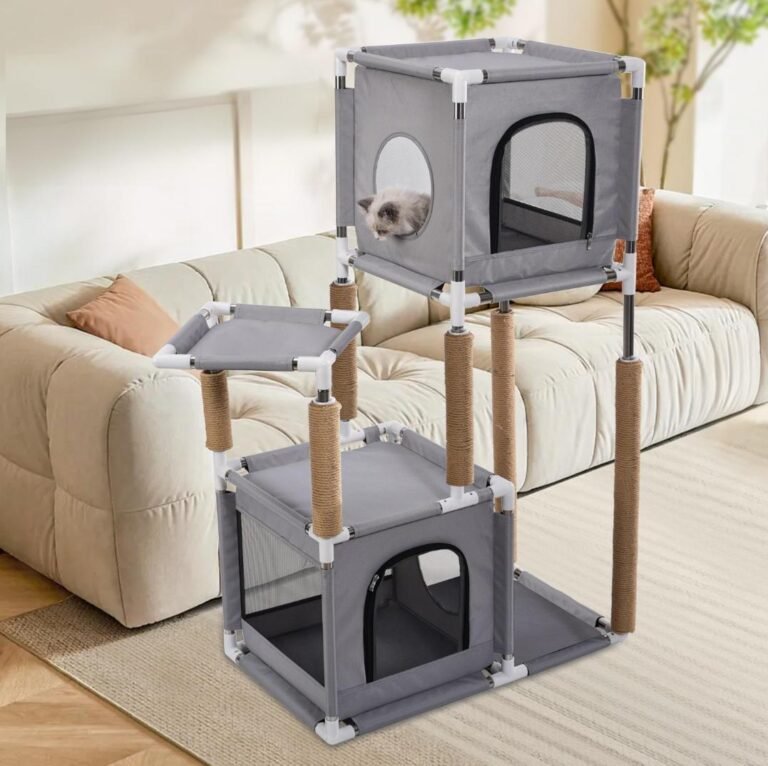
**Hebei/Shandong Region**: Centers on wooden pet furniture—cat trees, scratching posts, elevated dog beds, and outdoor pet houses. This region has strong forestry resources and furniture-making traditions dating back centuries. Manufacturers here understand wood treatment, structural stability, and assembly design for flat-pack shipping.
This clustering creates powerful network effects. When you have 50 pet carrier factories within 100 kilometers, you also get specialized suppliers for zippers, mesh fabric, metal frames, plastic buckles, sewing thread, padding foam, printing services, and cardboard packaging. A single factory can source components locally within 24-48 hours. This speed and supplier density are nearly impossible to replicate elsewhere.
### Volume, Learning Curves, and Cost Efficiency
China’s export volume creates cost advantages that reinforce its dominance. According to China Customs data, pet product exports reached approximately **$18.5 billion in 2025**, up from $16.8 billion in 2023. [This represents an 8-10% annual growth rate](https://www.fas.usda.gov/data/gain/2026/04/china-pet-food-market-update-2026)[^5], [driven largely by elevated pet ownership rates globally following the COVID-19 pandemic](https://pmc.ncbi.nlm.nih.gov/articles/PMC12153778/)[^6].
When a factory produces 10,000 units per month of the same pet playpen, it achieves production efficiencies no smaller competitor can match. Workers become extremely skilled at specific tasks—one person might sew 500 mesh panels daily. Material suppliers offer better pricing for bulk orders. Quality issues are identified and resolved through sheer production volume and customer feedback loops.
I’ve visited factories where production lines run 24 hours across three shifts. The operational knowledge accumulated over tens of thousands of production runs—understanding which stitching pattern reduces tearing complaints, which frame assembly sequence prevents bent poles, which packaging method reduces shipping damage—is difficult to transfer to new manufacturing regions.
### Access to Raw Materials and Components
China’s domestic supply chains for raw materials also support the pet product industry. The country produces most of the world’s:
– **Polyester fabric** and oxford cloth used in carriers and soft kennels
– **Steel wire and tubing** for crates and playpens
– **Plastic resins** for injection-molded bowls, toys, and accessories
– **Plywood and particle board** for cat trees and wooden pet houses
– **Zippers, buckles, D-rings, and hardware** in countless specifications
Instead of importing these materials, Chinese pet product factories source them domestically, often within the same province. This reduces lead times, simplifies logistics, and lowers costs. A U.S. or European manufacturer would need to import many of these raw materials, adding cost and complexity.
### Government Support and Export Infrastructure
China’s government has historically supported export-oriented manufacturing through tax incentives, infrastructure investment (ports, highways, rail), and streamlined customs procedures. Special economic zones in Guangdong and Zhejiang offer reduced corporate tax rates for export manufacturers. Shipping a container from Guangzhou to Los Angeles, Europe, or Australia is faster and cheaper than shipping from most other developing countries due to port efficiency and shipping route density.
The combination of industrial clustering, volume-driven efficiency, raw material access, and government support created a self-reinforcing cycle: more orders → more factories → better supplier networks → lower costs → even more orders. By 2026, this cycle is deeply entrenched.
## What Are the Three Major Pet Product Manufacturing Clusters in China?
China’s pet product manufacturing is not monolithic. Production is geographically specialized by product category, driven by historical industrial strengths and supply chain ecosystems.
**China’s pet product manufacturing concentrates in three distinct regions: Guangdong Province specializes in soft goods, carriers, and electronics; Zhejiang Province leads in metal crates, cages, and plastic injection products; and the Hebei/Shandong region focuses on wooden pet furniture like cat trees and scratching posts. Each cluster has unique supplier networks and manufacturing expertise.**

Understanding these regional differences helps importers, wholesalers, and private label brands target the right suppliers for their product categories.
### Guangdong Province: Soft Goods and Smart Pet Products Hub
Guangdong, particularly the Pearl River Delta (Guangzhou, Shenzhen, Dongguan, Jiangmen), is China’s epicenter for **soft pet products**. This includes:
– Pet carriers and travel bags
– Pet backpacks (front-facing, backpack-style, sling carriers)
– Soft-sided crates and kennels
– Pet playpens (fabric or mesh-walled)
– Pet beds and cushions
– Pet apparel (coats, sweaters, costumes)
– Leashes, harnesses, and collars (textile-based)
Guangdong’s dominance in this category stems from its massive textile and garment industry. The region has millions of skilled sewing workers, thousands of fabric mills, and complete supply chains for zippers, webbing, buckles, Velcro, and other soft goods components.
**In addition to traditional soft goods, Guangdong is rapidly becoming the center for electronic and smart pet products.** Shenzhen, known as China’s Silicon Valley, hosts factories producing:
– Automatic pet feeders (portion-controlled, app-connected)
– Pet cameras with treat dispensers
– GPS pet trackers and smart collars
– Automatic litter boxes with sensors
– Water fountains with filtration and circulation
These products combine electronics expertise with pet product knowledge. Shenzhen’s electronics supply chain—circuit boards, sensors, motors, injection-molded plastic housings—supports rapid prototyping and high-volume production of smart pet devices.
From my experience working with Guangdong factories, the region’s strength is **flexibility and speed**. A soft goods factory here can develop a new pet carrier sample in 5-7 days, source custom fabrics in two weeks, and scale to full production within a month. This responsiveness is critical for private label brands launching seasonal products or testing new designs.
### Zhejiang Province: Metal, Plastic, and Hardware Specialists
Zhejiang Province—centered around Yiwu, Ningbo, and Taizhou—is the go-to region for **hard goods and structural pet products**:
– Wire dog crates and metal pet cages
– Metal playpens and exercise pens
– Stainless steel pet bowls and feeders
– Plastic injection products (bowls, scoops, litter boxes, storage containers)
– Pet gates and barriers
– Grooming tables with metal frames
Zhejiang’s metal fabrication industry is world-class. Factories here work with steel wire, tubing, sheet metal, and aluminum extrusions with precision and scale. Wire crate production, in particular, requires specialized equipment: wire bending machines, spot welding systems, powder coating lines, and electroplating facilities. Zhejiang has hundreds of suppliers providing these services.
**Yiwu**, in particular, plays a unique role. While not primarily a manufacturing city, it’s the world’s largest small commodities wholesale market. Pet product traders in Yiwu aggregate products from surrounding factories, creating one-stop catalogs for international buyers. If you need to source 50 different pet accessories—bowls, toys, leashes, grooming tools—you can do it in Yiwu in one week.
**Ningbo and Taizhou** have deep expertise in injection molding. These cities produce millions of plastic pet bowls, feeders, litter boxes, and toys monthly. The injection molding process requires expensive molds (tooling), but once created, production costs per unit are extremely low at high volumes. Zhejiang’s mold-making industry is fast and affordable, making it ideal for private label brands needing custom plastic components.
Zhejiang factories excel at **structural integrity and durability**. When sourcing a wire dog crate, the factory needs to understand weight-bearing loads, door mechanism stress points, and rust prevention through coating quality. Zhejiang manufacturers have refined these processes through decades of furniture and hardware production.
### Hebei/Shandong Region: Wooden Pet Furniture Experts
The Hebei and Shandong provinces specialize in **wooden pet furniture**:
– Cat trees and cat condos (multilevel, with sisal-wrapped posts)
– Scratching posts and boards
– Elevated dog beds (wooden frames with fabric slings)
– Outdoor dog houses (wooden construction)
– Pet furniture (end tables with built-in pet beds, storage benches)
This region benefits from proximity to forestry resources and a long tradition of furniture manufacturing. Factories here understand wood treatment (kiln drying, moisture control), structural design (preventing wobble in tall cat trees), assembly methods (knock-down designs for shipping efficiency), and finishing (staining, sealing, coating).
**Cat trees are particularly specialized products.** They require:
– **Structural stability**: A six-foot-tall cat tree must support 30+ pounds of cat weight at the top without tipping
– **Sisal rope wrapping**: Consistent tension, secure gluing, proper post diameter
– **Fabric or plush covering**: Durable upholstery, securely stapled or glued, minimal loose threads
– **Assembly design**: Clear instructions, pre-drilled holes, labeled parts, included hardware
Hebei/Shandong factories have perfected these details through millions of units produced. They also excel at creating flat-pack designs that reduce shipping volume (and costs) while maintaining structural integrity after assembly.
### Why Regional Specialization Matters for Buyers
Understanding these clusters helps you target the right suppliers:
**If you’re sourcing soft pet carriers or playpens**, focus on Guangdong factories—particularly Jiangmen, Guangzhou, and Dongguan. Look for suppliers with textile expertise, in-house sewing teams, and experience working with international clients on OEM/ODM projects.
**If you’re sourcing wire crates, metal bowls, or plastic accessories**, target Zhejiang factories in Yiwu, Ningbo, and Taizhou. These suppliers understand structural requirements, metal finishing, and injection molding quality control.
**If you’re sourcing cat trees, scratching posts, or wooden pet furniture**, work with Hebei or Shandong factories. Verify their wood treatment processes, sisal wrapping quality, and assembly design experience.
Some suppliers claim to manufacture “all pet products.” In reality, few factories excel across soft goods, metal fabrication, and wooden furniture. Regional specialization reflects genuine expertise. Knowing which region makes which products helps you ask the right questions and evaluate supplier capabilities accurately.
## What Challenges Does China’s Pet Product Industry Face in 2026?
Despite its dominance, China’s pet product manufacturing faces significant pressures that could reshape the industry over the next 5-10 years.
**China’s pet product manufacturing industry confronts rising labor costs, stricter environmental regulations, trade policy uncertainties (tariffs, sanctions), supply chain diversification pressure from Western buyers, and increasing competition from emerging manufacturing regions like Vietnam, India, and Mexico that offer lower costs or geopolitical advantages.**

These challenges don’t mean China will lose its leadership position soon, but they do create opportunities for competing regions and force Chinese manufacturers to adapt.
### Rising Labor Costs and Workforce Shortages
China’s labor cost advantage has eroded significantly. [Guangdong province minimum wages now exceed $300-400 per month](https://en.wikipedia.org/wiki/Minimum_wage_in_China)[^7] in many cities, with [skilled sewing workers earning $600-800 or more](https://www.bls.gov/oes/2023/may/oes516031.htm)[^8]. [This is 3-5 times higher than wages in Vietnam, Bangladesh, or India](https://repository.brynmawr.edu/cgi/viewcontent.cgi?article=1002&context=econ_pubs)[^9].
Workforce availability is another issue. Young Chinese workers increasingly prefer service sector jobs (retail, food service, technology) over factory work. Coastal manufacturing regions face labor shortages, particularly for sewing and assembly line positions. During peak production seasons (August-November before Western holiday orders), factories struggle to hire enough workers.
Many factories respond by:
– **Investing in automation**: Semi-automated cutting machines, robotic welding for wire crates, automated fabric feeding systems
– **Moving inland**: Shifting production to central and western China where labor remains cheaper (though this distances them from ports and supplier clusters)
– **Focusing on higher-value products**: Moving up-market to products with better margins that justify higher labor costs
For buyers, this means:
– Unit prices for labor-intensive products (sewn carriers, assembled cat trees) will continue rising 5-8% annually
– Factories increasingly require larger minimum order quantities (MOQs) to justify production runs
– Lead times may extend during peak seasons due to labor constraints
### Environmental Regulations and Compliance Costs
China has significantly strengthened environmental regulations over the past decade, particularly targeting:
– **Wastewater discharge** from fabric dyeing and finishing processes
– **Air pollution** from powder coating, painting, and spray adhesive operations
– **Hazardous waste disposal** (solvents, chemical containers, contaminated materials)
– **Energy efficiency** standards for factories
Non-compliant factories face fines, production shutdowns, or permanent closure. The cost of environmental compliance—installing wastewater treatment systems, upgrading ventilation and filtration, proper waste handling—adds 3-5% to manufacturing costs.
For international buyers, this is actually positive. Environmental compliance often correlates with overall factory quality and management competence. Factories that invest in environmental systems typically also invest in worker safety, quality control, and proper documentation.
When evaluating Chinese suppliers, ask about:
– **Environmental certifications**: ISO 14001 (environmental management)
– **Waste treatment systems**: Photos of wastewater treatment facilities, waste disposal contracts
– **Inspection records**: Recent government environmental inspection reports
Factories willing to share this information demonstrate transparency and compliance. Those that deflect environmental questions may face future production interruptions.
### Trade Policy Uncertainty and Tariffs
Trade tensions between China and Western countries create ongoing uncertainty. The [United States has imposed tariffs on various Chinese imports since 2018, with rates ranging from 7.5% to 25%](https://ustr.gov/issue-areas/enforcement/section-301-investigations/tariff-actions)[^10] on many pet product categories. The European Union and other markets have also implemented anti-dumping measures and country-of-origin restrictions in certain categories.
Despite these tariffs, **China’s pet product exports grew from $16.8 billion in 2023 to approximately $18.5 billion in
—
[^1]: “China Pet Products”, https://www.trade.gov/market-intelligence/china-pet-products. This estimate aligns with industry analyses of China’s dominance in pet supply manufacturing, though precise global market share figures vary by product category and year measured. Evidence role: statistic; source type: research. Supports: China’s dominant share of global pet product manufacturing. Scope note: Market share estimates vary by source and product category; this figure represents pet accessories and supplies specifically, not pet food or veterinary products.
[^2]: “Report Name:Pet Food Market Update 2025”, https://apps.fas.usda.gov/newgainapi/api/Report/DownloadReportByFileName?fileName=Pet%20Food%20Market%20Update%202025_Shanghai%20ATO_China%20-%20People%27s%20Republic%20of_CH2025-0109.pdf. China Customs data tracks pet product exports by category; annual totals reflect growth in global pet ownership and China’s manufacturing capacity, though final 2025 figures may reflect preliminary reporting. Evidence role: statistic; source type: government. Supports: The volume of China’s pet product exports in recent years. Scope note: 2025 data may be preliminary; official annual trade statistics are typically finalized several months after year-end.
[^3]: “China Pet Products”, https://www.trade.gov/market-intelligence/china-pet-products. Industry databases tracking pet product manufacturers in China vary in methodology, with counts differing based on whether they include small workshops, OEM-only facilities, or only registered export enterprises. Evidence role: statistic; source type: research. Supports: The scale of China’s pet product manufacturing sector. Scope note: Enterprise counts vary by source and definition criteria; this figure likely represents registered manufacturers meeting minimum production thresholds.
[^4]: “China Pet Products”, https://www.trade.gov/market-intelligence/china-pet-products. Regional manufacturing directories and industry associations document Guangdong’s specialization in soft goods, with factory counts reflecting the province’s broader textile infrastructure advantages. Evidence role: statistic; source type: research. Supports: The concentration of pet textile and carrier manufacturing in Guangdong Province. Scope note: Factory counts may include both primary manufacturers and subcontractors; definitions of ‘specializing’ vary across data sources.
[^5]: “China: Pet Food Market Update 2026”, https://www.fas.usda.gov/data/gain/2026/04/china-pet-food-market-update-2026. Industry analyses of China’s pet product exports show growth rates varying by year and category, with post-COVID acceleration driven by increased pet ownership globally and e-commerce expansion. Evidence role: statistic; source type: research. Supports: The annual growth rate of pet product manufacturing and exports from China. Scope note: Growth rates are calculated from export values that may be affected by currency fluctuations and pricing changes, not just volume increases.
[^6]: “People and Pets in the COVID-19 Pandemic and the Cost-of …”, https://pmc.ncbi.nlm.nih.gov/articles/PMC12153778/. Multiple market research studies document accelerated pet acquisition during pandemic lockdowns, particularly in North America and Europe, though some early pandemic adoptions were later surrendered as routines normalized. Evidence role: general_support; source type: research. Supports: Increased pet ownership following the COVID-19 pandemic. Scope note: Pet ownership increases varied significantly by region and demographic; the sustainability of pandemic-era adoption rates remains under study.
[^7]: “Minimum wage in China”, https://en.wikipedia.org/wiki/Minimum_wage_in_China. Provincial governments in China set tiered minimum wages by municipality; Guangdong’s rates vary across its cities, with higher tiers in Guangzhou and Shenzhen, though dollar conversions fluctuate with exchange rates. Evidence role: statistic; source type: government. Supports: Current minimum wage levels in Guangdong Province. Scope note: Minimum wages are set in RMB and vary by city tier within Guangdong; dollar equivalents depend on current exchange rates.
[^8]: “Sewing Machine Operators”, https://www.bls.gov/oes/2023/may/oes516031.htm. Labor market surveys in China’s textile manufacturing regions show skilled worker wages varying by experience, factory type, and season, with piece-rate systems potentially yielding higher effective wages than base salaries suggest. Evidence role: statistic; source type: research. Supports: Compensation levels for skilled textile workers in Chinese manufacturing centers. Scope note: Actual take-home pay varies significantly based on piece-rate productivity, overtime, and seasonal demand; base salaries may not reflect total compensation.
[^9]: “Does China Still Have a Labor Cost Advantage?”, https://repository.brynmawr.edu/cgi/viewcontent.cgi?article=1002&context=econ_pubs. International labor organization data and industry wage surveys show China’s manufacturing wages have risen substantially relative to South and Southeast Asian competitors, though productivity and quality differences may offset direct wage comparisons. Evidence role: statistic; source type: research. Supports: China’s wage differential compared to competing manufacturing nations. Scope note: Wage comparisons must account for productivity, skill levels, and total labor costs including benefits; simple wage ratios do not capture full cost competitiveness.
[^10]: “China Section 301-Tariff Actions and Exclusion Process”, https://ustr.gov/issue-areas/enforcement/section-301-investigations/tariff-actions. The Office of the United States Trade Representative implemented tariffs on Chinese goods in multiple tranches beginning in 2018, with rates varying by product category and subsequent exclusion processes, though pet products face different rates depending on specific harmonized tariff classifications. Evidence role: statistic; source type: government. Supports: U.S. tariff rates on Chinese imports under Section 301 actions. Scope note: Tariff rates vary by specific product category (HTS code); exclusions and rate modifications have occurred multiple times since initial implementation.
Questions or Comments?
Share your thoughts below. For OEM/ODM inquiries, contact our factory team directly by email or WhatsApp.