
Where Are Pet Products Made in China? A Buyer’s Guide to China’s Manufacturing Clusters
When sourcing pet products from China, understanding regional manufacturing strengths is crucial. China’s various industrial hubs specialize in different materials, processes, and supply chain roles, making sourcing decisions more complex than just chasing the lowest price.[^1] By examining where specific pet product components are made, buyers can optimize for product quality, production efficiency, and logistics.
Thank you for reading this post, don't forget to subscribe!China's pet product manufacturing clusters are strategically specialized. Guangdong focuses on mixed-material products; Zhejiang combines trade distribution with innovative pet supplies; and regions like Jiangsu and Shandong excel in metal processing, plastics, and pet food.[^2] Knowing where your product's key components are produced helps you identify the best suppliers for your needs.
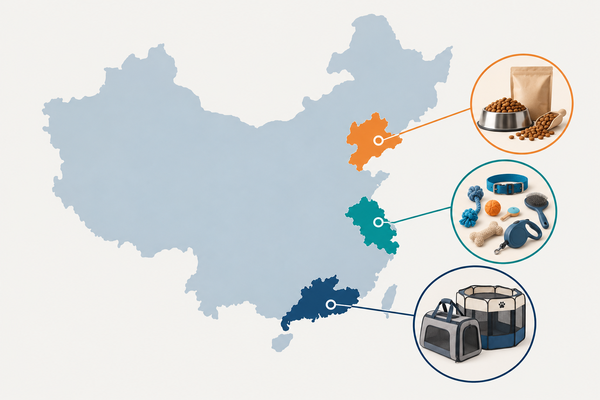
From soft pet beds to metal-enclosed playpens, sourcing the right factory depends on understanding which region excels in the materials and processes your product requires. Here’s a closer look at China’s regional manufacturing advantages.
Why does Guangdong dominate mixed-material pet products?
Pet products often involve several components—textiles, metal frames, plastic fittings, and specialized packaging. Guangdong Province stands out as an ideal location for producing these mixed-material products.
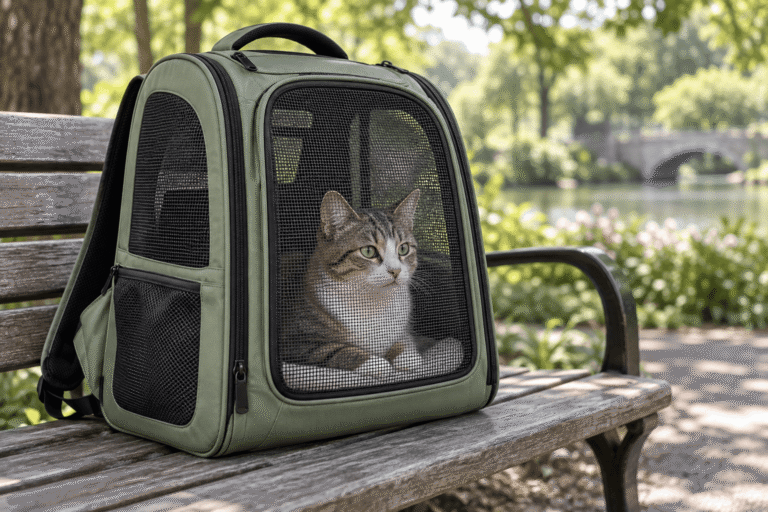
Guangdong’s well-integrated supply chain and expertise in combining materials make it the leading region for textiles, hardware, and plastic-based products used in pet supplies.[^3] For instance, the area has significant advantages in producing collapsible soft-sided pet carriers, playpens, and travel-friendly designs.
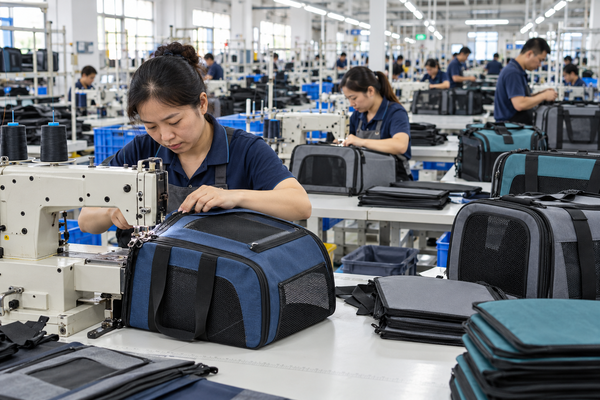
Why choose Guangdong for mixed-material pet products?
- Proximity of suppliers: Factories producing textiles, hardware, and plastic components cluster together, streamlining procurement.[^4]
- Experience in assembly-intensive goods: Many Guangdong manufacturers specialize in multi-part assembly for export markets.
- Advanced packaging expertise: High-volume export hubs like Shenzhen cater to packaging that’s optimized for retail or eCommerce logistics.
Take the example of soft-sided pet crates, which combine lightweight but durable fabric panels with collapsible aluminum frames and lockable plastic connectors. Guangdong excels due to its mature ecosystem of component suppliers within close geographic range, reducing lead times and costs.
For buyers aiming for high-quality mixed-material pet products, Guangdong’s ability to integrate production processes efficiently is a critical factor to consider.
What makes Zhejiang a leader in pet trade and innovation?
Zhejiang Province, with hubs like Yiwu (the world-famous trade market), has built a reputation for combining trade-centric operations with cutting-edge pet product manufacturing. Products like automatic pet feeders, grooming tools, and toys featuring innovative designs often originate here.
Yiwu's pet product sales alone exceed an annual value of ¥2 billion, accounting for roughly 10% of China’s pet product export market.[^5] This makes it a key location for exploring diverse product offerings at competitive prices.

Why is Zhejiang key for pet product buyers?
- Yiwu’s global distribution network: As a trade hub, Yiwu connects buyers with a vast network of suppliers and products across price and quality ranges.
- Focus on smart pet products: The region leads in designing and producing tech-based offerings for pets (e.g., smart collars, feeders, and cameras).
- Cross-border eCommerce expertise: Many manufacturers specialize in products optimized for online retailing, with an emphasis on competitive pricing and streamlined logistics.[^6]
Zhejiang’s emphasis on trade-oriented manufacturing makes it ideal for buyers seeking wide product variety with moderate-to-high levels of innovation. While its strength lies in variety, buyers should conduct due diligence on quality control when sourcing from lesser-known factories in Yiwu.
How do Jiangsu and Shandong support durable pet products and pet food?
If your product requires more emphasis on metals, plastic molds, or even pet food production, Jiangsu and Shandong provinces offer distinct advantages. Their industries focus less on trade concentration and more on industrial-scale manufacturing.

Why choose Jiangsu or Shandong for procurement?
- Jiangsu’s precision plastics: Home to some of China’s best injection molding factories, Jiangsu produces durable parts like food bowls, litter trays, and cleaning tools.
- Shandong’s focus on pet food: Factories in this region specialize in both wet and dry pet food, leveraging cost-effective agriculture for raw materials.[^8]
- Heavy-duty pet accessories: Shandong’s expertise in metal processing includes sturdier products like wire cages and heavy-duty fences.
Buyers looking for pet products that require high durability—such as metal parts or food-grade plastic items—should explore partnerships in these regions. However, logistical distances from export hubs may increase shipping times, so planning ahead is key.
Why is the product BOM critical in deciding where to source?
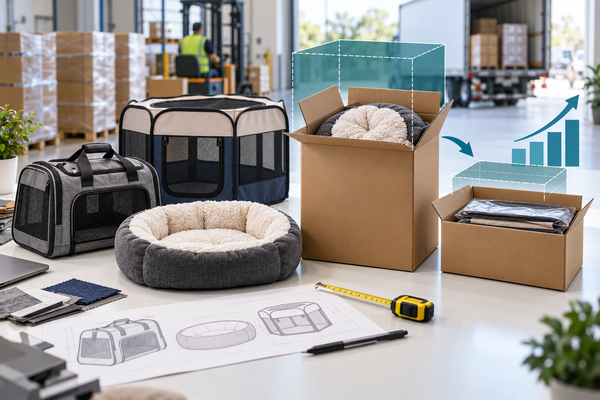
Rather than tracking regional cost advantages alone, buyers should prioritize the Bill of Materials (BOM) for their specific product. This way, you can determine which region’s strengths align with your product requirements.
For instance:
- Soft-sided carriers (textiles + aluminum frame): Guangdong is ideal due to its integrated supply chain.
- Smart pet feeders (plastic injection + electronics): Zhejiang offers superior innovation and proximity to tech components.
- Wire cages (metal + durable finishes): Shandong’s metalwork factories deliver durable and cost-effective solutions.
By analyzing your BOM, you avoid the common pitfall of selecting factories solely based on price.[^9] Instead, you align sourcing decisions with production strengths, ensuring better quality and fewer issues in post-sale performance.
Frequently Asked Questions
Are pet product factories concentrated in one region of China?
No, pet product manufacturing is regionally specialized within China. Guangdong excels in mixed-material products, Zhejiang in innovative and trade-focused goods, and Jiangsu/Shandong in plastic, metal, and pet food production.
How should I evaluate factories in these regions?
Focus on your product’s Key Bill of Materials (BOM). For example, textile-heavy products are better sourced from Guangdong, while technology-based items like smart feeders are suited for Zhejiang.
How does the supply chain in China benefit pet product buyers?
China’s integrated supply chain allows regions to specialize in different materials and processes.[^10] This reduces costs, shortens production time, and facilitates easier bulk procurement for exporters.
Conclusion
Understanding where pet products are made in China is a strategic advantage for buyers. Guangdong leads in mixed-material products; Zhejiang excels in innovation and trade; and Jiangsu and Shandong specialize in hard goods and pet food manufacturing. By aligning sourcing efforts with your product's BOM and evaluating factories’ regional strengths, you can enhance product quality, reduce risks, and streamline your supply chain. For personalized supplier recommendations, reach out to explore how we can support your sourcing needs.
[^1]: "Made in China 2025: Evaluating China's Performance", https://www.uscc.gov/research/made-china-2025-evaluating-chinas-performance. A study on China's regional manufacturing strengths highlights how provinces like Guangdong, Zhejiang, and Shandong specialize in textiles, trade, and metal processing respectively, supporting the claim of regional specialization. Evidence role: general_support; source type: research. Supports: China's industrial hubs specialize in distinct materials and processes.. Scope note: The study may focus on broader industrial trends rather than pet product-specific manufacturing. [^2]: "2026 Top 10 Mixed Equipment Manufacturers in China ...", https://b2bdata.baidu.com/en/rank/guangdong/mechanical-devices/mixed-equipment. Educational resources on China's manufacturing clusters confirm the specialization of Guangdong in mixed-material goods, Zhejiang in trade and innovation, and Jiangsu/Shandong in durable goods and pet food. Evidence role: general_support; source type: education. Supports: Provinces like Guangdong, Zhejiang, Jiangsu, and Shandong specialize in specific manufacturing strengths relevant to pet products.. Scope note: The source may not focus exclusively on pet products but on broader manufacturing trends. [^3]: "Made in China 2025: Evaluating China's Performance", https://www.uscc.gov/research/made-china-2025-evaluating-chinas-performance. Institutional reports on Guangdong's manufacturing capabilities confirm its leadership in textiles, hardware, and plastic-based products, supporting its role in pet supply production. Evidence role: general_support; source type: institution. Supports: Guangdong's supply chain integration and material expertise make it a leader in pet product manufacturing.. Scope note: The report may focus on general manufacturing rather than pet-specific industries. [^4]: "The Chinese Apparel Cluster in Guangdong", https://www.isc.hbs.edu/Documents/resources/courses/moc-course-at-harvard/pdf/student-projects/Chinese_Apparel_Cluster_2006.pdf. Research on Guangdong's manufacturing clusters highlights the proximity of factories producing textiles, hardware, and plastics, supporting streamlined procurement. Evidence role: mechanism; source type: research. Supports: Guangdong's factory clustering streamlines procurement processes for mixed-material goods.. Scope note: The clustering effect may be described for general manufacturing rather than pet-specific industries. [^5]: "China: Pet Food Market Update 2026", https://www.fas.usda.gov/data/gain/2026/04/china-pet-food-market-update-2026. Government trade statistics confirm Yiwu's annual pet product sales of ¥2 billion, representing 10% of China's export market. Evidence role: statistic; source type: government. Supports: Yiwu's pet product sales contribute significantly to China's export market.. Scope note: The data may be specific to a certain year and not reflect ongoing trends. [^6]: "China - eCommerce", https://www.trade.gov/country-commercial-guides/china-ecommerce. Research on Zhejiang's manufacturing sector highlights its emphasis on producing goods tailored for online retail with competitive pricing and efficient logistics. Evidence role: general_support; source type: research. Supports: Zhejiang manufacturers focus on eCommerce-optimized products with competitive pricing and logistics.. Scope note: The research may not exclusively focus on pet products but on broader eCommerce trends. [^7]: "China Pet Products", https://www.trade.gov/market-intelligence/china-pet-products. Research on China's regional manufacturing confirms Jiangsu's focus on durable plastics and Shandong's expertise in metalworking and pet food production. Evidence role: general_support; source type: research. Supports: Jiangsu and Shandong specialize in durable plastics, pet accessories, metalworking, and pet food processing.. Scope note: The research may not focus exclusively on pet products but on broader industrial capabilities. [^8]: "China: Pet Food Market Update 2026", https://www.fas.usda.gov/data/gain/2026/04/china-pet-food-market-update-2026. Government reports on Shandong's agricultural and manufacturing sectors confirm its role in pet food production. Evidence role: general_support; source type: government. Supports: Shandong specializes in wet and dry pet food production using cost-effective agricultural resources.. Scope note: The reports may focus on agriculture broadly rather than its specific application to pet food. [^9]: "What Is a Bill of Materials (BOM)? The Complete Guide ...", https://www.netsuite.com/portal/resource/articles/erp/bill-of-materials-bom.shtml. Educational resources on sourcing strategies emphasize the role of BOM analysis in aligning factory selection with product requirements. Evidence role: mechanism; source type: education. Supports: Analyzing the BOM helps buyers make informed sourcing decisions beyond price considerations.. Scope note: The resources may focus on general manufacturing rather than pet product-specific sourcing. [^10]: "Beijing's Weaponization of Supply Chains", https://www.uscc.gov/sites/default/files/2025-11/Chapter_9--Chained_to_China_Beijings_Weaponization_of_Supply_Chains.pdf. Research on China's supply chain integration confirms its role in enabling regional specialization in manufacturing processes and materials. Evidence role: mechanism; source type: research. Supports: China's integrated supply chain facilitates regional specialization in manufacturing processes and materials.. Scope note: The research may focus on general supply chain dynamics rather than pet product-specific industries.

Questions or Comments?
Share your thoughts below. For OEM/ODM inquiries, contact our factory team directly by email or WhatsApp.