How ZRC turns incomplete product references into clear decisions, documented approvals and actionable next steps.*
Thank you for reading this post, don't forget to subscribe!By ZRC Pet Products Team
Good supplier communication reduces the work a buyer must do to move an OEM pet product project forward. A manufacturer should identify missing information, explain the effect on the product and propose the next decision. Fast replies help, but useful replies matter more.
At ZRC, we support pet product OEM/ODM development for brands, importers, wholesalers, retail buyers and e-commerce sellers. Buyers can send a drawing, product photo, physical sample, artwork or market reference. We then discuss the product details that must be confirmed before sampling or production.
Why is communication part of product quality?
Product quality begins before material is cut or a sewing line starts. If the buyer and manufacturer do not share the same understanding of dimensions, materials, construction, artwork and order contents, a well-made product can still be the wrong product.
A message such as “please adjust the logo” may depend on several unanswered questions. The printable area may change with the product size. The artwork ratio may not fit that area. A seam, zipper or curved panel may affect the logo position. The manufacturer needs to explain those constraints before editing the file.
Communication therefore has a direct role in quality: it turns expectations into decisions that can be checked.
What should a manufacturer do when information is missing?
A manufacturer should identify the missing item and explain why it matters. The next response should help the buyer decide, rather than simply state that the information is incomplete.
For example, if the final product dimensions are unknown, the manufacturer can show the provisional printable area, mark which measurement still needs approval and explain that the artwork may require another adjustment after the dimensions are frozen.
At ZRC, we try to separate three types of information:
- Confirmed requirements that should remain unchanged.
- Requested customizations that require technical or commercial confirmation.
- Open questions that need a buyer decision before the project can move forward.
This separation prevents a request from being mistaken for a confirmed product feature.
What does proactive supplier communication look like?
Proactive communication gives the buyer an actionable next step. It does not mean that the manufacturer makes commercial or design decisions without approval.
<table> <thead><tr><th>Project event</th><th>Weak response</th><th>Useful manufacturer response</th></tr></thead> <tbody> <tr><td>Artwork does not fit</td><td>“Please revise.”</td><td>Show the available area, identify the conflict and offer an adjustment for approval.</td></tr> <tr><td>Dimensions are incomplete</td><td>“Size?”</td><td>List the missing measurements and explain which components they affect.</td></tr> <tr><td>Material name is unclear</td><td>Choose an assumed material.</td><td>Ask for the required feel, appearance or reference sample before confirmation.</td></tr> <tr><td>A sample needs revision</td><td>Start another sample from chat messages.</td><td>Record the issue, requested change, approval and next sample version.</td></tr> <tr><td>Order contents are unclear</td><td>Copy what appears in a photo.</td><td>Confirm every product, accessory and quantity included in one sales unit.</td></tr> </tbody> </table>
The useful response preserves buyer control while reducing the number of messages needed to reach a decision.
How does ZRC organize a pet product brief?
We begin by asking what the buyer wants to sell, who the target customer is and which reference best represents the intended product. We then review the product structure and the customization request together.
Depending on the product, the brief may cover:
- Overall product dimensions and component dimensions
- Fabric, mesh, filling, frame or support materials
- Seams, edge binding, zippers, openings and access points
- Logo method, artwork, printable area and label position
- Color references and requested variations
- Product contents, carry bags and other requested accessories
- Packaging and instructions for the intended sales channel
- Proposed quantity and the way it is split by style, size or color
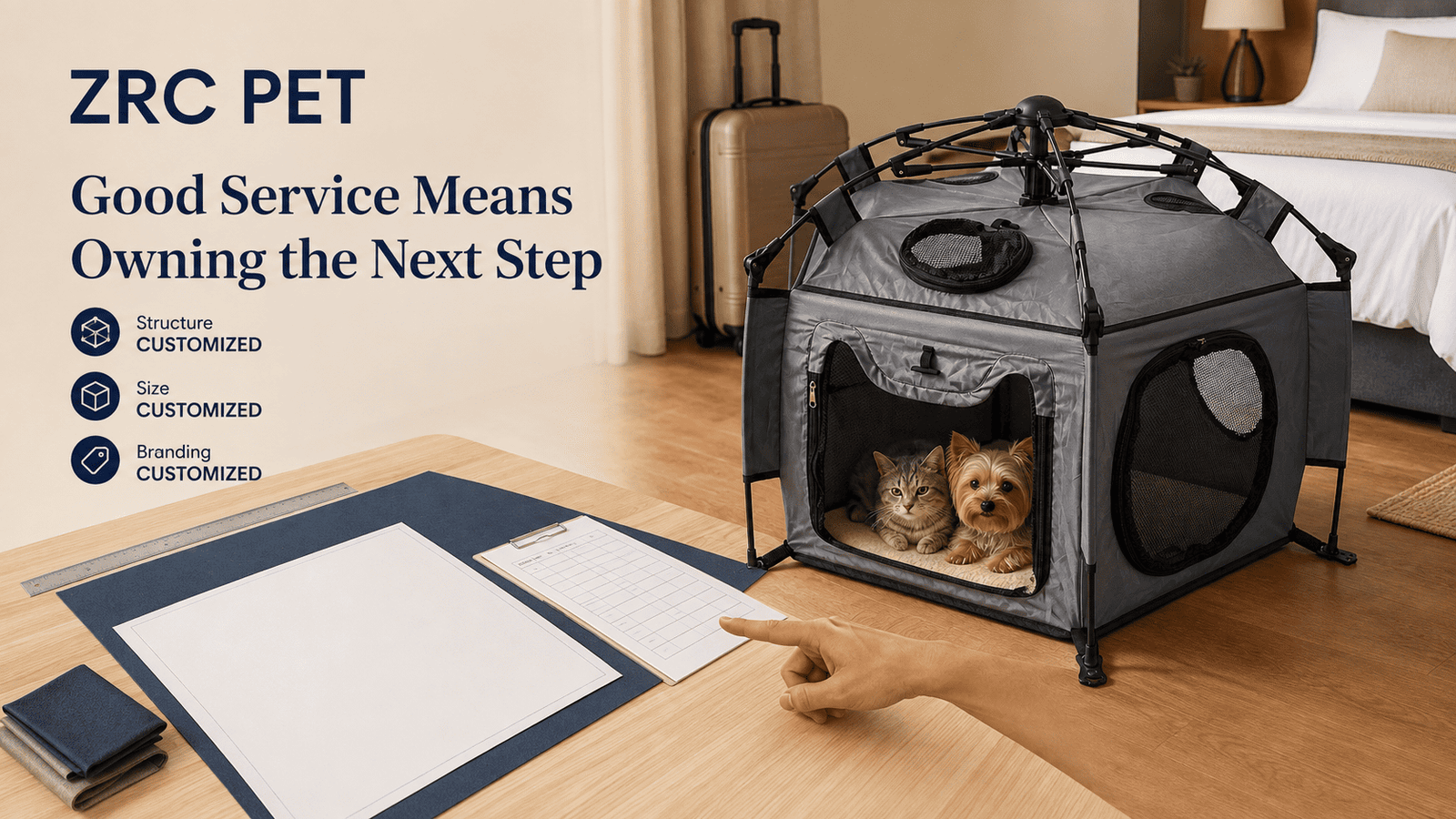
Items described as CUSTOMIZED are not automatic commitments. They indicate project requirements that must be reviewed and confirmed.
Why should decisions be documented?
A documented decision gives the buyer and manufacturer one reference for sample review. It reduces the risk that an old artwork file, previous measurement or superseded message is used by mistake.
For each important change, the record should show the issue, the proposed action, the buyer's approval and the version that will be used next. This is especially useful when several people participate in design, sourcing and approval.
Documentation does not remove the need for inspection or testing. It makes the approved target clearer so later checks can compare the product with the same agreed information.
Can better communication reduce project cost?
Better communication can reduce avoidable coordination, duplicate artwork changes and unclear sample revisions. It does not guarantee a particular cost saving or delivery date.
A supplier with a slightly lower unit price may require more buyer time if every small issue needs repeated follow-up. Buyers should therefore consider both the quoted scope and the work needed to manage the supplier.
The most useful commercial comparison is between quotations based on the same confirmed product brief. If one quotation excludes customization or uses a different material, the lower price does not represent the same product.
What should buyers send in the first inquiry?
Send enough information for the manufacturer to identify both the product and the open decisions. A practical first inquiry can include:
- Reference image, drawing or existing sample
- Target market and sales channel
- Requested size or size direction
- Preferred material, color and branding
- Proposed order quantity and variation split
- Features that must remain unchanged
- Options that can still be discussed
- Problems or customer feedback you want the next version to address
An incomplete brief can still start a discussion. Mark uncertain items clearly instead of presenting estimates as final specifications.
Frequently asked questions
Does a fast response mean a supplier communicates well?
Not by itself. A useful response should identify the issue, answer the question or state the next decision required. Speed without substance may still leave the buyer doing all the follow-up work.
Can ZRC help adjust customer artwork?
ZRC can discuss artwork placement and adjustment as part of a project. The product dimensions, available area, artwork file and approval requirements must be confirmed for the selected product.
Will ZRC make decisions for the buyer?
We may present options and explain their effects, but material, appearance, commercial scope and final sample approval remain buyer decisions.
What if we only have a reference photo?
A reference photo can start the project. We will need to discuss the dimensions, materials, structure, branding and order scope that the photo does not define.
How do we contact ZRC?
Visit https://zrcpet.com/contact/ or email info@zrcpet.com. Send your product reference, target market, proposed quantity and customization requirements.
A good supplier owns the next step
A good manufacturer does more than produce the item described in the last message. The manufacturer identifies the next decision, keeps confirmed requirements visible and helps the buyer move the project forward without taking approval away from the buyer.
If you are planning a private-label pet product, contact ZRC. Send us your reference image, target market, proposed quantity and customization requirements, and we will review the information needed for the next discussion.

Questions or Comments?
Share your thoughts below. For OEM/ODM inquiries, contact our factory team directly by email or WhatsApp.